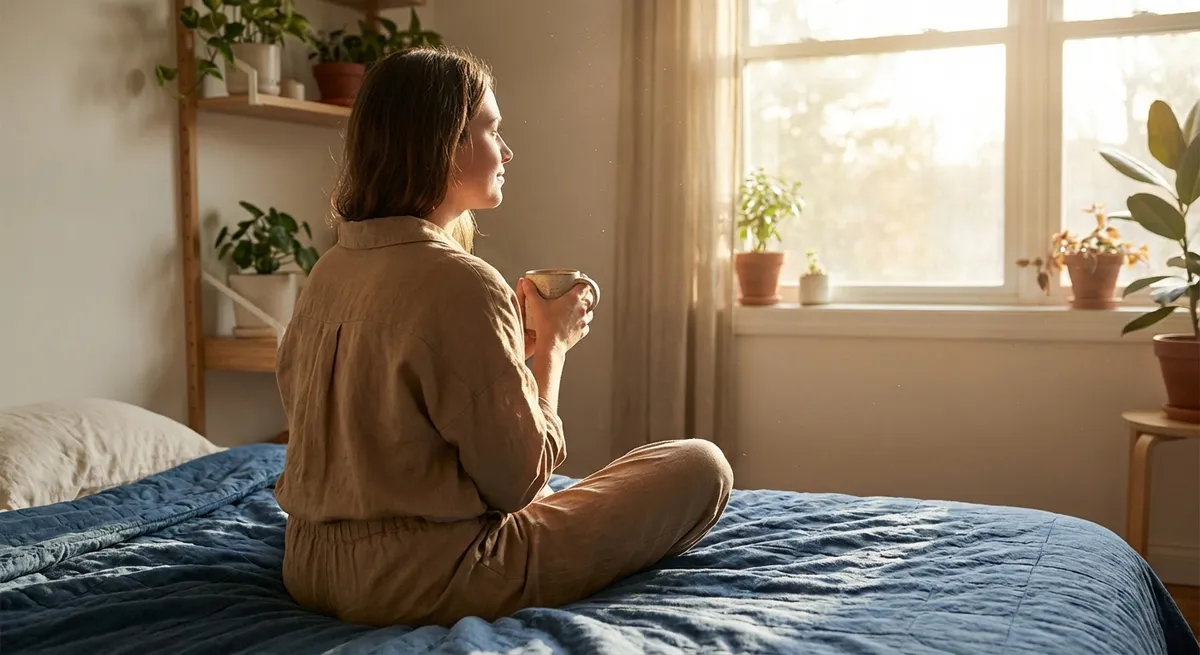
Softening the Pace: Giving Yourself Permission to Slow Down
Relaxation often begins with permission—the quiet, internal yes that says, “I don’t have to move at this speed.” When life feels rushed, our nervous system can slip into a constant state of alertness, making it harder to rest, think clearly, or feel grounded. Slowing your pace, even slightly, sends your body a message of safety. You might walk more slowly between rooms, pause for three breaths before responding to a message, or give yourself five extra minutes before starting your next task.
This softening is not about abandoning responsibilities; it is about releasing the pressure to do everything quickly and perfectly. Notice how your body feels when you let yourself move a little more gently—shoulders dropping, jaw relaxing, breath deepening. Over time, this shift from haste to presence can become a quiet daily practice of relaxation, woven into everything you do rather than saved for rare, empty days.
Calming Tip 1: Practice “one gentle thing at a time.”
Choose a single task—washing a cup, sending an email, making tea—and do it without multitasking. Let it be simple, ordinary, and unhurried. This small act of intentional slowness can calm your nervous system and remind you that you do not have to live every moment in fast-forward.
Quiet Rituals: Creating Tiny Islands of Rest in Your Day
Relaxation does not always require long stretches of time. Tiny rituals, repeated gently, can become small islands of rest in the middle of ordinary days. A ritual might be as simple as sitting by a window each morning with a cup of water, stepping outside to feel the air on your face between meetings, or taking a few moments to stretch your hands and release tension.
What makes these moments powerful is their consistency and kindness. When your mind knows there are little pauses ahead, the day can feel less overwhelming. It can help to link your ritual to something you already do—like brushing your teeth, turning on your computer, or preparing a meal. Over time, this familiar rhythm signals to your body that it is safe to de-escalate, even briefly.
Calming Tip 2: Begin and end your day with a soft ritual.
In the morning, try a 2–3 minute practice such as placing one hand on your chest and noticing your breath. In the evening, dim the lights, turn off screens a little earlier if possible, and choose something gentle—quiet reading, soft stretching, or simply sitting in stillness. These small bookends can soften the edges of your day and make rest feel more accessible.
Gentle Breath, Softer Thoughts: Calming the Nervous System
Our breath is one of the simplest ways to soothe a stressed mind and body. When we are anxious or overwhelmed, breathing tends to become shallow and quick, reinforcing a sense of urgency. Slowing and deepening the breath can signal your nervous system to shift toward calm, often within a few minutes. You do not need complicated techniques; just a soft focus and a little patience.
You might try slowly inhaling through your nose, feeling your belly rise, then exhaling slightly longer than you inhaled. Even a few rounds of breathing like this—where the out-breath is longer—can encourage your body to relax. As you breathe, it can help to silently think gentle phrases like “in with ease” and “out with tension,” or simply count your breaths. Your thoughts do not have to be perfectly quiet; just let them move through while you keep returning to the rise and fall of your breath.
Calming Tip 3: Try a short “4–6” breathing pause.
Inhale softly through your nose for a count of 4, then exhale through your mouth or nose for a count of 6. Repeat this for 1–3 minutes. If counting feels stressful, simply aim for a comfortably slow inhale and a slightly longer, relaxed exhale. This small practice can be done almost anywhere—at your desk, in the car (while parked), or before sleep.
Soothing the Senses: Creating a Calmer Environment
The spaces around us quietly shape how we feel. When there is too much noise, clutter, or constant stimulation, relaxation can feel far away. You do not need a perfectly tidy home or a silent room to feel calmer, but small shifts to gently soothe your senses can make a real difference. Ask yourself: What can I soften in what I see, hear, and feel right now?
You might dim bright lights in the evening, open a window for fresh air, or play gentle sounds like soft music or nature recordings. Clearing just one small surface—a bedside table, a corner of your desk, or a chair—can create a visual sense of ease. A soft blanket over your legs, a warm drink in your hands, or a favorite comfortable shirt can all become quiet supports for your nervous system.
Calming Tip 4: Choose one sense to comfort.
If you feel overstimulated, pick a single sense and offer it something soothing. For example:
- Sight: Lower the brightness on your screens or step away from them for a few minutes.
- Sound: Turn down loud music or switch to gentle, calming sounds.
- Touch: Place a warm hand on your heart or rest your palms on your thighs and press gently.
This focused, sensory care helps anchor you in the present moment and can ease tension without needing a lot of time or effort.
Kind Boundaries: Protecting Your Energy with Compassion
Relaxation is not only about what you add to your day, but also about what you gently choose to limit. Constant availability—emotionally, digitally, and physically—can slowly drain your energy. Setting kind boundaries is an act of quiet respect for your own limits. It may feel uncomfortable at first, especially if you are used to saying yes quickly, but soft boundaries can support a more peaceful inner life.
A boundary might look like pausing before committing to plans, limiting how often you check messages, or allowing yourself to step away from conversations that feel too heavy at the moment. You do not need to explain every boundary in detail; simple, respectful phrases such as “I can’t take that on right now” or “I need a bit of quiet this evening” are enough. Over time, these choices create more space for rest, joy, and genuine presence.
Calming Tip 5: Create a “gentle no” phrase you can use.
Prepare one or two soft, honest sentences you can lean on when you feel overwhelmed, such as:
- “I’d love to help, but I don’t have the capacity right now.”
- “I need some time to rest, so I’ll have to pass this time.”
Having these words ready can make it easier to protect your energy without guilt, opening more room in your life for calm and ease.
Conclusion
Relaxation is not a destination you reach once and for all; it is a series of small, kind choices you make throughout the day. Softening your pace, tending to tiny rituals, breathing more gently, soothing your senses, and setting kind boundaries are all simple ways to move toward a more stress-free way of living. You do not have to practice them perfectly or all at once. Even choosing one gentle tip to try today is enough.
Let calm come in quietly, in small moments: a slower step, a softer breath, a kinder “no.” Over time, these moments can weave together into a life that feels less like a constant race and more like a steady, peaceful walk home to yourself.
Sources
- [National Institute of Mental Health – 5 Things You Should Know About Stress](https://www.nimh.nih.gov/health/publications/stress) – Overview of how stress affects the body and simple strategies to manage it
- [American Psychological Association – Stress Management](https://www.apa.org/topics/stress) – Research-based information on stress, coping strategies, and relaxation approaches
- [Harvard Health Publishing – Relaxation techniques: Breath control helps quell errant stress response](https://www.health.harvard.edu/mind-and-mood/relaxation-techniques-breath-control-helps-quell-errant-stress-response) – Explanation of how controlled breathing supports the nervous system
- [Mayo Clinic – Relaxation techniques: Try these steps to reduce stress](https://www.mayoclinic.org/healthy-lifestyle/stress-management/in-depth/relaxation-technique/art-20045368) – Practical guidance on incorporating relaxation practices into daily life
- [Cleveland Clinic – Setting Healthy Boundaries](https://health.clevelandclinic.org/setting-boundaries) – Discussion of why boundaries protect mental health and decrease stress