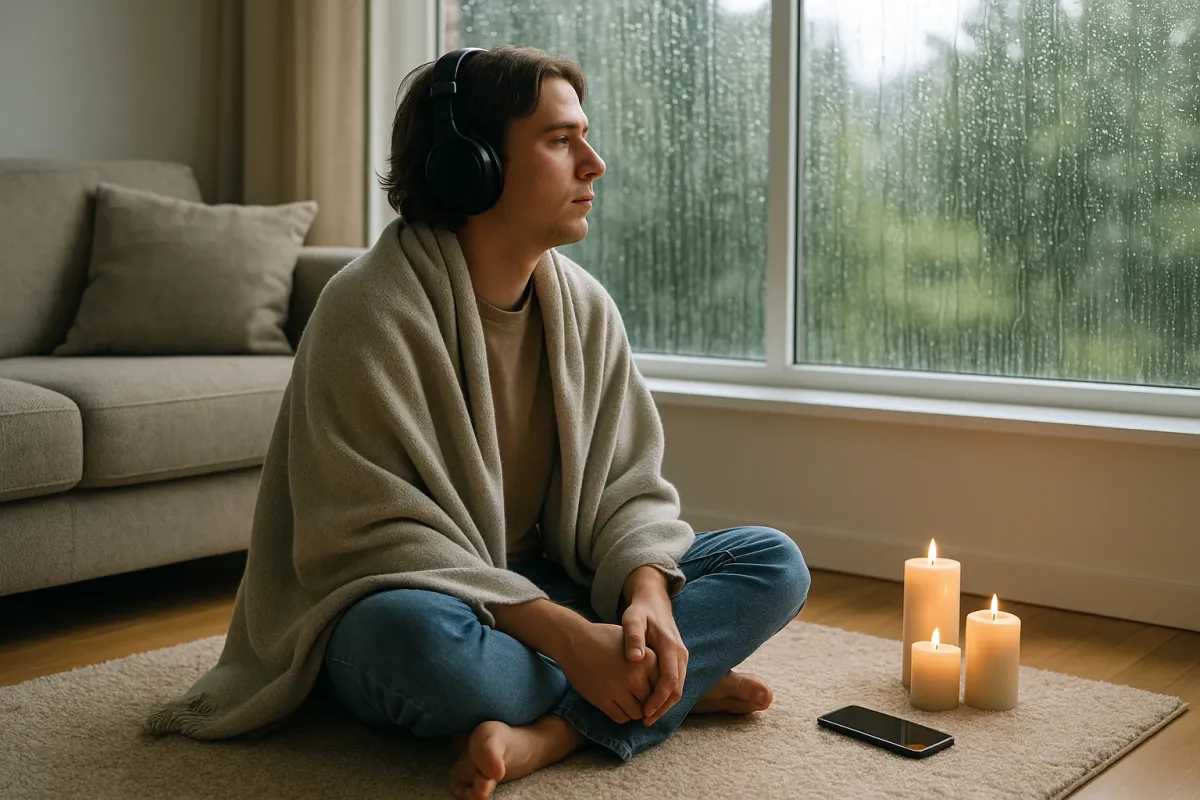
From slow walkers and unread messages to family drama and work stress, our nervous systems are getting pulled in many directions. Yet beneath the noise, there is a quieter question waiting for us: how do we want to show up, inside ourselves, when life doesn’t go our way?
Inspired by this growing conversation about our reactions, let’s explore some gentle, practical ways to stay soft in a world that often feels sharp.
1. Pause Before You React: A Tiny Gap That Changes Everything
When a situation pushes your buttons—an ignored text, a rude comment, a sudden change of plans—your body often reacts before you’ve had time to think. Your heart speeds up, your shoulders tense, and your mind starts writing a fast, dramatic story. This is where a simple, intentional pause can be quietly powerful.
The next time you feel that surge of “I’m about to lose it,” try this: silently say to yourself, “Pause.” Then take one slow breath in through your nose, and exhale gently through your mouth. Feel your feet on the ground or your hands resting in your lap. You are not fixing the situation yet; you are simply creating a tiny bit of space between what happened and what you’ll do next. This gap is where choice lives. Over time, this small ritual can become a familiar doorway back to yourself, so you respond from steadiness rather than from a storm.
2. Name What You Feel: Soften the Grip of Overwhelming Emotions
Many of the scenarios people are voting on right now—someone cutting in line, being left on “read,” feeling excluded—trigger old, tender places: rejection, disrespect, invisibility. When we don’t acknowledge what’s really hurting, anger or anxiety can take over the whole moment.
A calming practice you can use anywhere is quietly naming your feelings. You might think or whisper to yourself: “This is frustration.” “This is disappointment.” “This is hurt.” You aren’t judging yourself for feeling it, just noticing. Research in psychology has shown that putting words to emotions can reduce their intensity, like gently loosening a tight knot. As you name what’s there, add a soft phrase: “It’s understandable I feel this way.” Let that kindness land. You are not weak for feeling; you are human. Naming your experience helps you hold it more gently, instead of being swept away by it.
3. Soften Your Body: Calm Your Nervous System from the Outside In
When we imagine “staying calm,” we often focus on the mind. But your body is the doorway your nervous system understands best. In a world that constantly asks you to react quickly—online, at work, in relationships—your body sometimes needs a clear, physical signal that it is safe to settle.
Try a simple “soften and release” scan. Start with your forehead: notice if you’re frowning or tensing, and gently relax those muscles. Move to your jaw: unclench your teeth and let your tongue rest on the floor of your mouth. Drop your shoulders away from your ears, allowing them to sink a little. Let your hands be soft, not gripping. You can do this while reading the news, standing in a line, or sitting at your desk. As your body softens, your breath usually follows, and your thoughts slowly untangle. You may not change the situation, but you change the state you face it in.
4. Choose One Gentle Boundary a Day: Protecting Your Peace Quietly
Many “would you stay calm or lose it?” moments actually begin long before the final straw. We say yes when we’re exhausted, keep answering late-night messages, or swallow hurt feelings to avoid conflict. Over time, our calm frays. One of the kindest techniques for staying grounded is practicing very small, consistent boundaries.
Today, you might choose just one: letting a message wait instead of replying instantly, closing your laptop at a certain time, or saying, “I’d like to think about that and get back to you.” These are not grand declarations; they are soft lines drawn in the sand of your day. Each small boundary tells your nervous system, “You matter, too.” When you honour these gentle limits, you carry less resentment and less secret exhaustion—and those are often the hidden sparks that make us “lose it” over something minor. Protecting your peace quietly is still protecting it.
5. Make a “Calm Ritual” for After Hard Moments
No matter how mindful you are, there will be days when you snap, shut down, or spiral. The online polls asking whether people “stay calm or lose it” can almost make it feel like there’s a right answer. But you are not a vote; you are a living, learning human being. What matters is not perfection, but how you care for yourself after the storm.
Create a simple, repeatable “aftercare” ritual for tough moments. It could be making a warm drink and sitting in silence for five minutes, stepping outside to look at the sky, taking a slow shower, or journaling a few sentences about what happened and what you needed. The ritual doesn’t have to fix anything. Its purpose is to tell your nervous system: “We’re safe now. I’m here with you.” Over time, knowing you have this gentle landing place can make intense moments feel less frightening. Your calm doesn’t disappear when you’re upset; it simply waits for you to return.
Conclusion
As people around the world click and vote on whether they’d “stay calm or lose it” in everyday dramas, we’re being quietly reminded of something tender: we’re all trying to find our way through stress, frustration, and hurt without losing ourselves. You do not have to be perfectly serene to live a calm life. You only need small, steady practices that help you come home to yourself, again and again.
A breath before you react. A name for what you feel. A softened jaw. A gentle boundary. A simple ritual for after the hard moments. These are quiet choices, easily overlooked from the outside, but they slowly reshape your inner world. In a culture that loves big reactions, let your softness be your quiet rebellion. You are allowed to stay gentle, even when life gets loud.