Why Relaxation Is Not A Luxury
Relaxation is more than just “taking a break.” It is a biological reset that allows your nervous system to shift from alertness and tension into a more restorative state. When you feel stressed, your body releases hormones like cortisol and adrenaline to keep you ready for action. This response is helpful in short bursts, but if it continues all day, it can leave you feeling drained, on edge, and unable to fully rest.
Calm moments, even very small ones, signal safety to your brain. Your heart rate can slow, your breathing deepens, and your muscles unclench. Over time, regular relaxation has been linked with better sleep, steadier mood, improved focus, and lower risk of stress-related health issues. Think of it as gently clearing away the static so you can hear your own inner voice again.
It is also important to remember that relaxation looks different for everyone. For some, it is a quiet cup of tea. For others, a slow walk, a warm bath, or a few minutes of mindful breathing. There is no perfect way to relax, only the way that helps you feel a little more at home in your own body.
Below are five calming tips to support a softer, more peaceful rhythm in your day.
Calming Tip 1: Begin And End Your Day With One Gentle Pause
The moments just after waking and just before sleeping can shape how the rest of your day feels. Instead of reaching for your phone, try offering yourself a brief, intentional pause. It can be as simple as placing a hand over your heart, closing your eyes, and noticing three slow breaths. Allow your jaw to soften, your shoulders to drop, and your thoughts to move a little more slowly.
At night, you might repeat this practice while in bed: three to five slow breaths, a gentle scan of your body from head to toe, and a quiet mental note of something you are grateful for or relieved about. This creates a small ritual of safety and softness at the edges of your day.
These pauses do not need to be perfect or profound. Their value lies in consistency and kindness. By greeting and closing your day with a little intentional calm, you teach your nervous system that it is safe to settle, even if the hours in between feel busy.
Calming Tip 2: Breathe In A Way That Tells Your Body “You’re Safe”
Your breath is one of the most accessible tools you have for relaxation. When stress rises, the breath often becomes quick and shallow, signaling your body to stay on high alert. A slower, deeper pattern sends the opposite message: “You can soften. You are safe enough right now.”
One gentle technique is called “extended exhale breathing.” Find a comfortable position, sitting or lying down. Inhale slowly through your nose for a count of four, then exhale softly through your mouth for a count of six or eight. The idea is not to strain or hold your breath, but simply to let the exhale be a little longer than the inhale. Try this for one or two minutes at first.
If counting feels stressful, you can instead imagine breathing in calm and breathing out tension. With each exhale, picture your worries leaving your body like a soft mist. Even a few rounds can bring a sense of groundedness and ease. Over time, this kind of breathing becomes a quiet anchor you can return to anytime your mind begins to race.
Calming Tip 3: Create A Small, Soothing Corner Of Your World
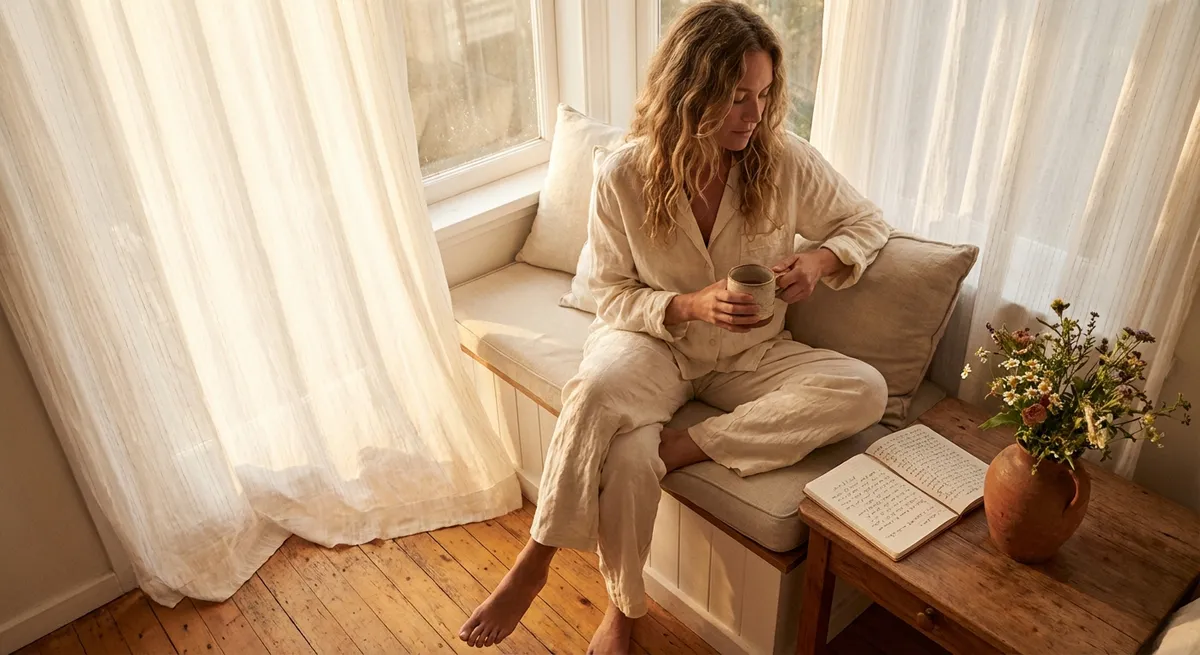
You do not need an entire room or a perfect home to create a calming environment. A single chair by a window, a soft blanket on the couch, or a small corner of your bedroom can become a gentle retreat. The aim is not aesthetic perfection, but a place that feels kind, safe, and quiet to you.
You might place a candle, a favorite book, a journal, or a plant there—simple things that make you feel a little lighter. When you sit in this space, you can choose a soft activity: slow breathing, stretching, reading a comforting page, or simply looking out the window and letting your eyes rest.
Over time, your body begins to associate this spot with relaxation. Even on a difficult day, simply sitting in your calming corner for a few minutes can send a subtle signal to your nervous system: “This is where we rest. This is where we soften.” Think of it as creating a physical reminder that you are allowed to pause.
Calming Tip 4: Move Your Body In Gentle, Kind Ways
Relaxation does not always mean stillness. Slow, mindful movement can be deeply calming, especially if you tend to “live in your head.” Gentle stretching, restorative yoga, or an unhurried walk can help release physical tension while steadying your thoughts.
You can begin by noticing where your body holds tightness: your neck, shoulders, jaw, lower back. With care, you might roll your shoulders, tilt your head from side to side, or reach your arms overhead and then slowly lower them. Move with curiosity rather than pressure—this is not about performance or fitness goals, but about listening.
If it feels comfortable, try walking without headphones for a few minutes, simply feeling your feet meet the ground and noticing what you see, hear, and feel around you. This kind of gentle movement brings you back into the present moment and reminds you that you are more than your racing thoughts.
Calming Tip 5: Set Softer Boundaries Around Your Attention
Your attention is one of your most precious resources. Constant news, messages, and notifications can keep your nervous system in a low-level state of alert, even when nothing urgent is happening. Relaxation becomes easier when you gently protect your mental space.
You might choose certain times of day to check messages or news, rather than constantly refreshing. You can also give yourself permission to silence non-urgent notifications for an hour while you rest, read, or simply sit quietly. If scrolling before bed leaves you feeling wired, consider replacing the last 10–15 minutes of screen time with a calming practice you enjoy.
Soft boundaries are not about shutting the world out forever; they are about creating enough quiet that you can hear your own inner signals. When you reduce constant input, your mind has room to slow down, process, and restore—much like closing extra windows on a computer to help it run more smoothly.
Conclusion
Relaxation does not need to be grand or time-consuming. It lives in the small choices: a slower breath, a gentler morning, a calming corner, a mindful walk, or a simple boundary around your attention. These practices are not about “fixing” yourself; they are about caring for yourself with the same tenderness you might offer a dear friend.
As you move through your days, you might begin to ask yourself simple, compassionate questions: “What would feel a little softer right now?” or “How can I make this moment 5% more peaceful?” Over time, these tiny acts of kindness toward yourself can weave into a quieter, steadier way of living—one where relaxation is not an occasional escape, but a gentle thread running through your everyday life.
Sources
- [National Institutes of Health – Relaxation Techniques](https://www.nccih.nih.gov/health/relaxation-techniques-for-health) - Overview of evidence-based relaxation practices and their health effects
- [American Psychological Association – Stress Effects on the Body](https://www.apa.org/topics/stress/body) - Explains how chronic stress impacts physical and mental health
- [Harvard Health Publishing – Breath Control](https://www.health.harvard.edu/mind-and-mood/breath-control-can-slow-the-racing-mind) - Describes how controlled breathing can calm the nervous system
- [Mayo Clinic – Mindfulness Exercises](https://www.mayoclinic.org/healthy-lifestyle/consumer-health/in-depth/mindfulness-exercises/art-20046356) - Offers simple, accessible mindfulness practices for daily life
- [Cleveland Clinic – Progressive Muscle Relaxation](https://health.clevelandclinic.org/progressive-muscle-relaxation) - Details a step-by-step method to release physical tension and promote relaxation