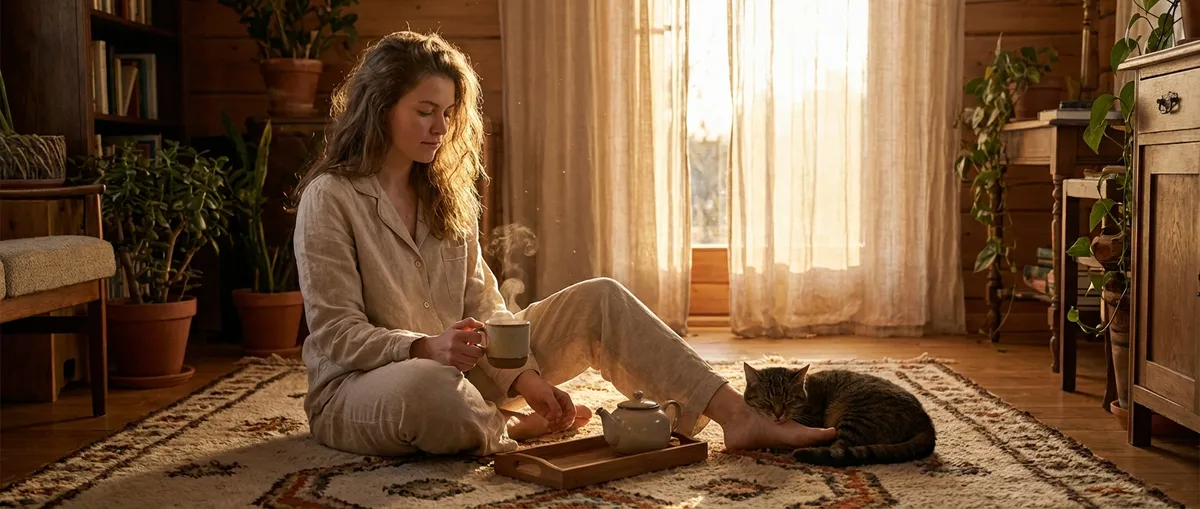
You don’t need a perfect morning routine, special equipment, or a silent house. You only need a willingness to pause, notice, and care for yourself in small but meaningful ways. Let this be an invitation to step into a slower, softer pace—right where you are.
Why Small Calming Rituals Matter
Stress rarely appears all at once; it gathers in layers—tight shoulders here, a clenched jaw there, thoughts that don’t know how to switch off. In the same way, relaxation can be built one small, caring choice at a time. Brief, intentional pauses signal to your nervous system that you are safe, and that it is okay to stand down from high alert.
When you create simple rituals—lighting a candle before answering emails, taking three deep breaths in the car before going inside, pausing to stretch before bed—you give your mind something steady to anchor to. These rituals don’t erase life’s challenges, but they soften how your body holds them. Over time, your system can begin to trust that calm is available, not as a rare luxury, but as a familiar place you visit many times a day.
Relaxation is not laziness; it is an essential part of how your brain processes experience and how your body repairs itself. Sleep deepens, digestion improves, focus sharpens, and patience stretches a little further when you are not constantly bracing for the next demand. Think of calming rituals as quiet acts of maintenance for your inner world—small, steady repairs that keep you from running on empty.
Tip 1: Create a Gentle “Arrival” Pause
Transitions—waking up, returning home, ending work—can be jarring. Instead of rushing from one mode to the next, try a soft arrival ritual that helps your body catch up with your schedule. Choose one or two daily transitions and mark them with a brief, calming pause.
When you wake up, before reaching for your phone, simply place a hand on your chest or belly and notice five breaths. Let your awareness linger on the rise and fall, without needing to change it. This tiny act tells your body that the day will begin with presence, not pressure.
After work or school, sit in your car or at your front door for one extra minute. Notice the weight of your body on the seat, your hands resting, your feet supported. Silently say, “That part of the day is over. I’m allowed to arrive here slowly.” This gentle pause creates a soft bridge between roles, easing tension and preventing stress from one part of your life from spilling into the next.
Tip 2: Soften Your Senses with a Quiet Comfort Corner
You don’t need an entire room to feel peaceful; sometimes a single chair, cushion, or corner can become a sanctuary. Choose a small space—a spot by a window, the end of the couch, a chair in your bedroom—and let it become a place where your nervous system learns to rest.
Keep this space simple and soothing: a blanket with a comforting texture, a favorite mug, a plant, a soft lamp, or a candle. The goal is not to decorate perfectly, but to signal safety and softness to your senses. Lower lighting, gentle colors, and familiar scents can all help your body relax.
Visit this corner for even three to five minutes at a time: sip tea slowly, read a few pages of a calming book, or simply sit and look outside. Over time, your mind will begin to associate this space with settling and ease, making it easier to shift out of stress when you sit there. Think of it as a quiet reset button you can press any time the world feels too loud.
Tip 3: Use Your Breath as a Soft Anchor
Breathing is always with you, which makes it a reliable doorway to calm. You don’t need complicated techniques; even small, gentle shifts in your breath can soothe your nervous system and invite relaxation. One simple practice is to breathe out slightly longer than you breathe in.
Try this: Inhale gently through your nose for a comfortable count of four, then exhale softly through your mouth or nose for a count of six. Repeat this for a few cycles, noticing how your shoulders, jaw, or stomach might begin to loosen. There’s no need to force anything—think of it as a quiet invitation rather than a demand.
You can tuck this soft breathing into many moments: waiting for the kettle to boil, standing in line, before a difficult conversation, or while lying in bed. Each time you return to your breath, you’re reminding your body that it doesn’t have to stay in “fight or flight.” Instead, you’re gently guiding it toward “rest and digest,” where relaxation lives.
Tip 4: Move Slowly to Melt Hidden Tension
Stress often hides in the body—tight hips from sitting, a stiff neck from screens, a chest held high and tight as if always on guard. Slow, mindful movement can help these pockets of tension unwind. You don’t need a formal workout; think more along the lines of kind, unhurried stretching.
Begin by choosing one area of your body to care for each day. Perhaps you circle your shoulders backward and forward, letting them drop away from your ears. Maybe you slowly turn your head side to side, feeling the length of your neck. Or you can stand up, reach your arms overhead on an inhale, and gently fold forward on an exhale, letting your upper body hang and release.
Move with curiosity rather than judgment. Ask yourself, “Where does my body feel tight? Where does it feel supported?” Let your breathing and movement travel together, steady and unforced. Even two or three minutes of conscious stretching can send a clear message to your body that it is safe to relax, making the rest of your day feel more spacious.
Tip 5: End the Day with a Soft-Heart Check-In
The way you close the day can shape how you rest—and how you meet tomorrow. Instead of scrolling until you’re too tired to keep your eyes open, try a brief, gentle check-in with yourself. This doesn’t need to be long or heavy; think of it as tucking your inner world into bed.
Sit or lie somewhere comfortable and place a hand on your chest, belly, or wherever feels soothing. Ask yourself three quiet questions:
What felt heavy today?
What felt kind or comforting, even in a small way?
What does my body need right now—warmth, quiet, reassurance, or simply sleep?
You might write a few words in a journal, or just let the answers drift through your mind. If something felt especially difficult, you can imagine gently setting it down for the night, promising yourself you don’t have to carry it while you sleep. If something went well, let yourself feel the softness of that moment for an extra breath or two. This small ritual tells your heart: “You are seen. You did enough. You are allowed to rest.”
Conclusion
Relaxation doesn’t require a different life, only a different way of meeting the one you have. Soft arrivals, cozy corners, quiet breaths, gentle movement, and tender nightly check-ins can begin to loosen the grip of constant tension. Each small ritual is a way of saying to yourself, “I deserve to feel safe. I deserve to feel ease.”
As you experiment with these calming practices, be patient. Some days will feel softer than others, and that’s okay. What matters is not perfection, but the steady, kind choice to return to yourself—again and again—with a little more gentleness than before.
Sources
- National Institutes of Health – Relaxation Techniques: What You Need To Know - Overview of evidence-based relaxation methods and their effects on health
- Harvard Health Publishing – Relaxation techniques: Breath control helps quell errant stress response - Explains how breathing practices support the nervous system
- Cleveland Clinic – Progressive Muscle Relaxation - Describes how gentle physical release can reduce stress and tension
- Mayo Clinic – Stress management - General guidance on stress, its impact, and lifestyle approaches to ease it
- American Psychological Association – Stress relief: When and how to say no - Offers practical, research-informed tips for managing daily stressors