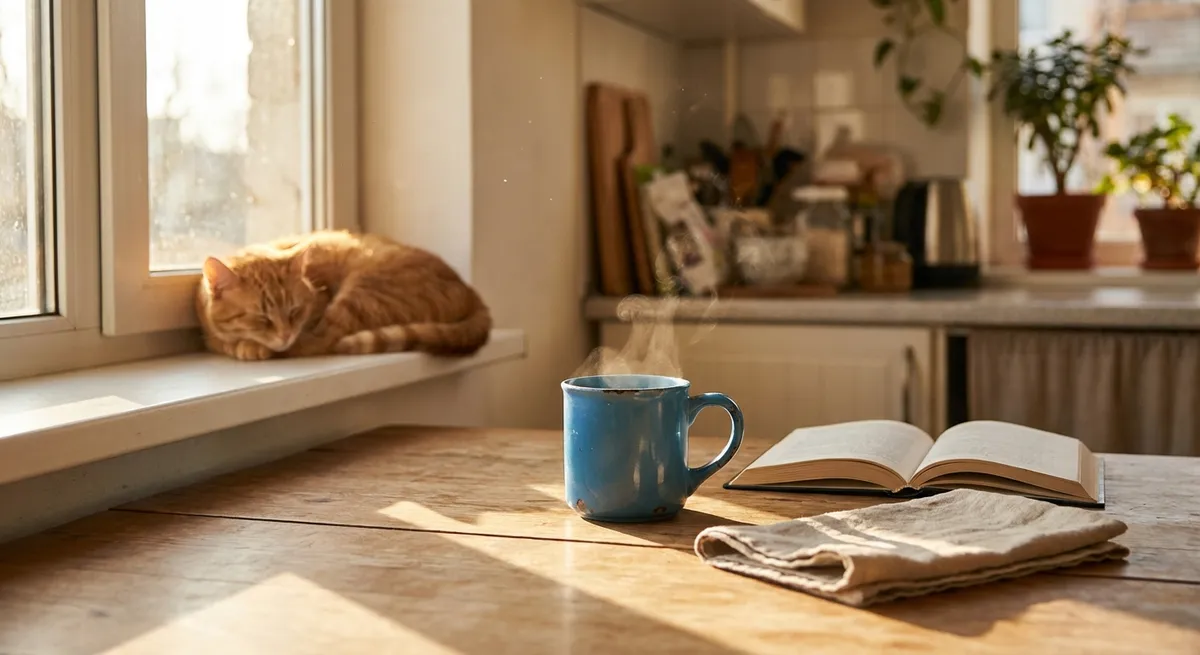
This article offers five calming invitations you can weave into ordinary moments, slowly shaping your days into something kinder and more spacious.
1. Turn Ordinary Pauses into Gentle Breath Moments
You already pause many times a day: waiting for the kettle to boil, standing in line, sitting in your car before driving off. Instead of filling these spaces with scrolling or worry, you can softly turn them into breathing moments.
Let your next pause be an invitation. Notice your feet on the floor, or the weight of your body in the chair. Inhale slowly through your nose, feeling your ribs expand, then exhale as if you are quietly sighing out tension. You don’t need a perfect count or technique—just a slightly slower, kinder breath than usual.
Imagine each exhale as a small release: the jaw loosening, the eyes softening, the forehead smoothing. If your mind wanders, that’s natural. Simply return to the feeling of air entering and leaving your body. Over time, these brief breathing pauses can settle your nervous system, making stress feel less sharp and more manageable.
2. Create a Gentle “Arrival” When You Get Home
Instead of dropping straight into chores, screens, or conversations the moment you get home, you can offer yourself a tiny transition—a soft landing between the outer world and your inner space.
Choose a simple arrival ritual: putting your hand on your heart for three breaths, changing into comfortable clothes, lighting a candle, or washing your hands slowly under warm water. As you do this, tell yourself something kind and grounding, such as, “I am home now,” or “This is a place where I can rest.”
This small practice sends a quiet message to your body that it is safe to loosen. Over time, your arrival ritual can become a cue for relaxation, helping you let go of the day’s noise more quickly. Even if your home is busy or shared, this one intentional minute can create a gentle boundary between “out there” and “in here.”
3. Let Sound Support Your Calm
Sound can soothe or strain your nervous system. Many of us move through the day surrounded by background noise—traffic, notifications, television, overlapping conversations—that our bodies quietly absorb as stress.
Try choosing your sound on purpose for a little while each day. You might play soft instrumental music while cooking, listen to gentle nature sounds while working, or enjoy a few minutes of quiet with no audio at all. Notice how your body responds: Does your breathing change? Do your shoulders soften? Does your mind feel a bit clearer?
If silence feels uncomfortable at first, you can start with soft, repetitive sounds like rain, waves, or wind. These can steady a restless mind and invite your thoughts to slow down. Over time, you may find that you crave these pockets of intentional sound—or soft quiet—as a way to reset during stressful moments.
4. Offer Your Body Small Acts of Kindness
Your body holds your tension—tight shoulders, clenched jaw, fidgeting hands, a stomach that feels knotted. Relaxation doesn’t always require a full workout or yoga session; it can begin with tiny, kind movements sprinkled throughout your day.
You might roll your shoulders back three times, stretch your arms overhead while you wait for a page to load, or gently massage your temples while you sit at your desk. If you spend long periods sitting, stand up for a slow, mindful stretch, noticing the sensations in your spine and hips as you move.
These micro-movements remind your body that it is being cared for. Even a brief walk—down the hallway, to the mailbox, around the block—can lower stress hormones and lift your mood. The goal isn’t doing more; it’s softening into the body you already live in, offering it moments of comfort instead of constant demand.
5. Shape a Kind Ending to Your Day
How your day ends can color how the next one begins. Instead of falling straight into sleep with your mind still racing, you can gently signal to your body that it is time to unwind.
Choose one small, consistent evening practice: dimming the lights earlier, sipping a warm caffeine-free drink, writing down three things you’re grateful for, or listing what you’ll handle tomorrow so your mind doesn’t have to keep rehearsing it. Let this be a quiet, unhurried moment, even if it’s just five minutes.
If you like, you can place a hand over your heart or your belly and notice your natural breathing. You don’t need to fix or control your thoughts—simply acknowledge them and imagine setting them down beside the bed for the night. Over time, this gentle closing ritual can improve your sleep quality and help your body associate evening with safety, softness, and release.
Conclusion
Relaxation doesn’t have to be dramatic or perfect. It can live in the way you pause for breath, the sounds you choose, the way you walk through your door, or the simple kindness you offer your body at the end of the day.
When stress feels heavy, you don’t have to transform everything at once. You can start with one soft invitation—a slightly slower breath, a quieter soundscape, a tiny stretch—and let calm grow from there, moment by gentle moment.
Sources
- [National Institute of Mental Health – 5 Things You Should Know About Stress](https://www.nimh.nih.gov/health/publications/stress) - Overview of stress, its effects on the body, and basic coping strategies
- [American Psychological Association – Stress Management](https://www.apa.org/topics/stress) - Research-based information on how stress impacts health and evidence-backed relaxation approaches
- [Harvard Health Publishing – Relaxation Techniques: Breath Control Helps Quell Errant Stress Response](https://www.health.harvard.edu/mind-and-mood/relaxation-techniques-breath-control-helps-quell-errant-stress-response) - Describes how slow breathing can calm the nervous system
- [Mayo Clinic – Stress Management](https://www.mayoclinic.org/healthy-lifestyle/stress-management/basics/stress-basics/hlv-20049495) - Practical tips for everyday stress relief and lifestyle adjustments
- [Cleveland Clinic – Benefits of Walking](https://health.clevelandclinic.org/the-many-benefits-of-walking) - Explains how even short walks can improve mood and reduce stress