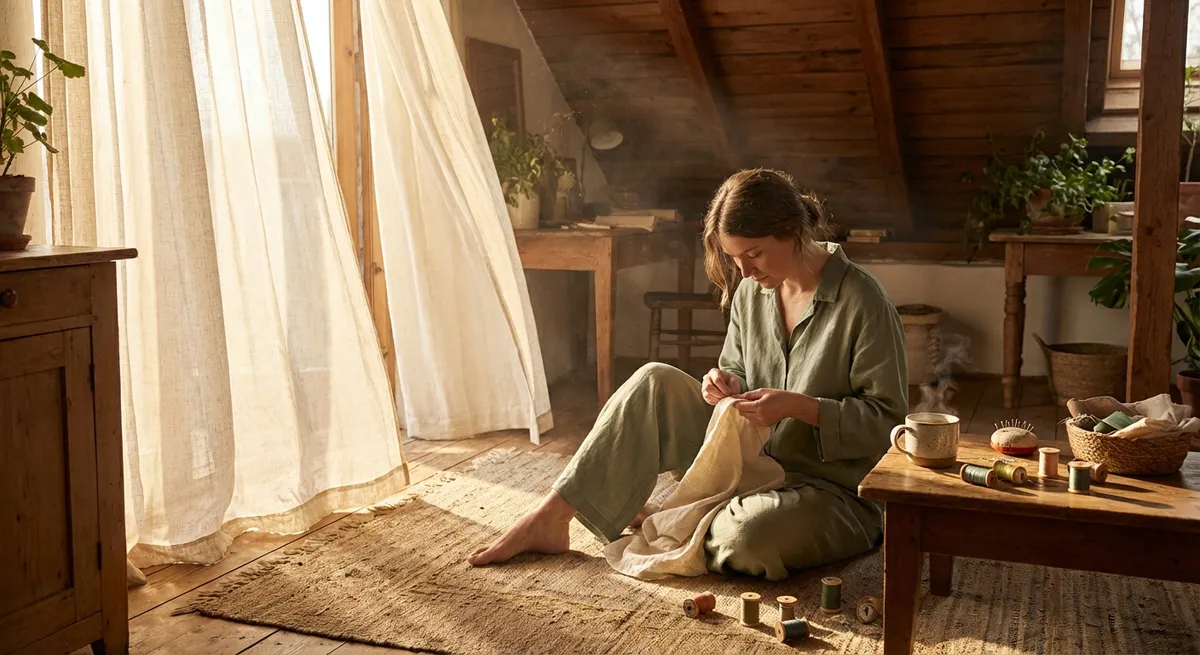
Meeting Stress with Softness, Not Force
Stress often invites us to tense up, speed up, and push through. It can feel like the only option is to “fix” everything quickly. Yet, calm rarely arrives through force. It tends to appear when we soften around what is happening, just a little at a time.
Instead of trying to remove stress instantly, you can practice relating to it differently. This might mean pausing before reacting, noticing the tightness in your jaw, or admitting to yourself, “This is a lot for me right now.” These simple acknowledgments are not signs of weakness; they are gentle openings that make room for calm to enter.
When your mind is busy, you don’t have to quiet every thought. You can focus instead on offering yourself small moments of steadiness: a slower breath, a kind phrase, or a comforting touch to your own hand or shoulder. Over time, these small gestures build a sense of inner safety, even when life outside you remains uncertain.
Calming Tip 1: Soft Breathing to Steady Your Nervous System
Breath is one of the most accessible ways to soothe your body. When stress rises, your breathing often becomes shallow and quick without you noticing. By slowing and lengthening your exhale, you gently send a message to your nervous system that you are safe enough to soften.
Try this simple practice when you feel tense or scattered:
- Sit or stand in a way that feels comfortable, letting your shoulders drop slightly.
- Gently close your eyes if that feels safe, or lower your gaze.
- Inhale through your nose to a slow count of four.
- Exhale through your mouth or nose to a slow count of six.
- Repeat for 6–10 rounds, noticing the sensation of air moving in and out.
If counting feels stressful, simply imagine your breath as a slow tide, coming in and going out. Your breath does not need to be deep or dramatic—just a little slower, a little smoother. Even one minute can make a meaningful difference.
Over time, you may begin to notice that this kind of breathing becomes a quiet refuge: something you can carry into meetings, waiting rooms, busy kitchens, or sleepless nights.
Calming Tip 2: Gentle Self-Talk When Your Mind Feels Harsh
Stress often speaks in a sharp inner voice: “You should handle this better. Why can’t you keep up? Everyone else seems fine.” This harshness adds another layer of strain on top of what you’re already carrying.
Softening your inner dialogue does not mean pretending everything is okay. It simply means speaking to yourself with the same tenderness you might offer a dear friend. When you notice your thoughts becoming critical, pause and gently ask:
- “What would I say to someone I love in this situation?”
- “Can I be on my own side, just for this moment?”
- “Is there a kinder way to describe what I’m going through?”
You might experiment with quiet phrases such as:
- “This is hard, and I’m doing the best I can.”
- “It makes sense that I feel this way.”
- “I’m allowed to be human right now.”
Even if you don’t fully believe these words at first, offering them softly and repeatedly can slowly shift how you relate to yourself. Kind self-talk does not remove stress, but it can remove the loneliness of facing it.
Calming Tip 3: Returning to Your Senses When Thoughts Race
When stress builds, the mind often spins into “what ifs” and worst-case scenarios. One gentle way to find steadiness is to come back to your senses—literally. Your body is always here in the present moment, even when your thoughts are racing ahead.
You might try this simple sensory grounding practice:
- Sight: Gently look around and name five things you can see. Notice colors, shapes, and light without judging them.
- Touch: Notice four things you can feel—the texture of your clothing, the warmth of a mug, the chair supporting you, your feet on the floor.
- Hearing: Listen for three sounds in the background or nearby, allowing them to rise and fade.
- Smell: Notice two scents, even if they are subtle: fresh air, soap, food, a candle.
- Taste: If possible, notice one taste—water, tea, gum, or simply the natural taste in your mouth.
You don’t need to do this perfectly or in any special order. The goal is not to escape your life, but to gently re-anchor yourself in what is real and immediate. Often, this quiet shift into the senses loosens the grip of anxious thoughts, even if only by a small degree—and sometimes, that small degree is enough.
Calming Tip 4: Tiny Transitions to Ease Your Day
Stress can build in the spaces between activities: finishing work and rushing into family tasks, waking up and immediately checking your phone, or ending a long day and collapsing into bed without a pause. These sudden shifts can leave your body feeling like it’s always bracing for the next thing.
You can invite more calm by creating tiny “transition moments” throughout the day—small pauses that signal to your mind and body that one part of your day is ending and another is beginning.
Here are a few gentle ideas:
- Before opening your emails, place a hand on your chest for three breaths.
- After turning off your work computer, step outside for one minute of fresh air.
- Before a meal, take a quiet moment to notice the colors and smells of your food.
- After arriving home, sit down and feel the support of your chair for a few breaths before starting chores.
- Before bed, dim the lights and spend a few moments stretching or simply resting your hands on your belly.
These brief rituals don’t have to be long or complicated. Their power lies in their consistency and intention: a quiet reminder to your nervous system that it does not need to sprint through the entire day without rest.
Calming Tip 5: Gentle Movement to Release Stored Tension
Stress does not only live in the mind; it often settles into the body as tight shoulders, clenched jaws, or a heavy feeling in the chest. Gentle movement can help release this stored tension and invite a sense of ease.
You don’t need a full workout or a perfect routine. Instead, you might explore soft, simple movements:
- Slowly roll your shoulders forward and back, noticing any areas of tightness.
- Gently stretch your neck by letting one ear drift toward your shoulder, then the other, moving with your breath.
- Stand up and sway side to side, feeling your weight shift through your feet.
- While seated, reach your arms overhead and take a soft, slow inhale, then exhale as you let them float back down.
Move only in ways that feel comfortable and safe for your body, and stop if anything causes pain. The focus is not on burning calories or “fixing” anything. It is on noticing where your body is asking for kindness, and offering it through slow, simple motion.
Even two or three minutes of gentle movement can change how you feel inside your skin, especially when paired with soft breathing and kind self-talk.
Conclusion
Calm does not have to arrive in grand gestures or perfect routines. It can emerge from small, steady choices: a slower breath, a kinder word to yourself, a brief pause between tasks, a moment of noticing the world through your senses, or a gentle stretch when your body feels tight.
Stress may still visit—it is part of being human—but you do not have to face it empty-handed. These quiet practices can act as soft threads of ease, woven through your day, reminding you that even in busy or difficult times, there is a place within you that can soften, breathe, and gently begin again.
Sources
- National Institutes of Health – Relaxation Techniques - Overview of evidence-based relaxation practices, including breathing and muscle relaxation
- American Psychological Association – Managing Stress - Research-backed information on how stress affects the body and strategies for coping
- Harvard Health Publishing – Take a Deep Breath - Explanation of how breathing exercises can calm the nervous system
- Cleveland Clinic – Grounding Techniques - Practical examples of sensory-based grounding for anxiety and stress
- Mayo Clinic – Exercise and Stress Relief - How gentle physical activity can help reduce stress and improve well-being