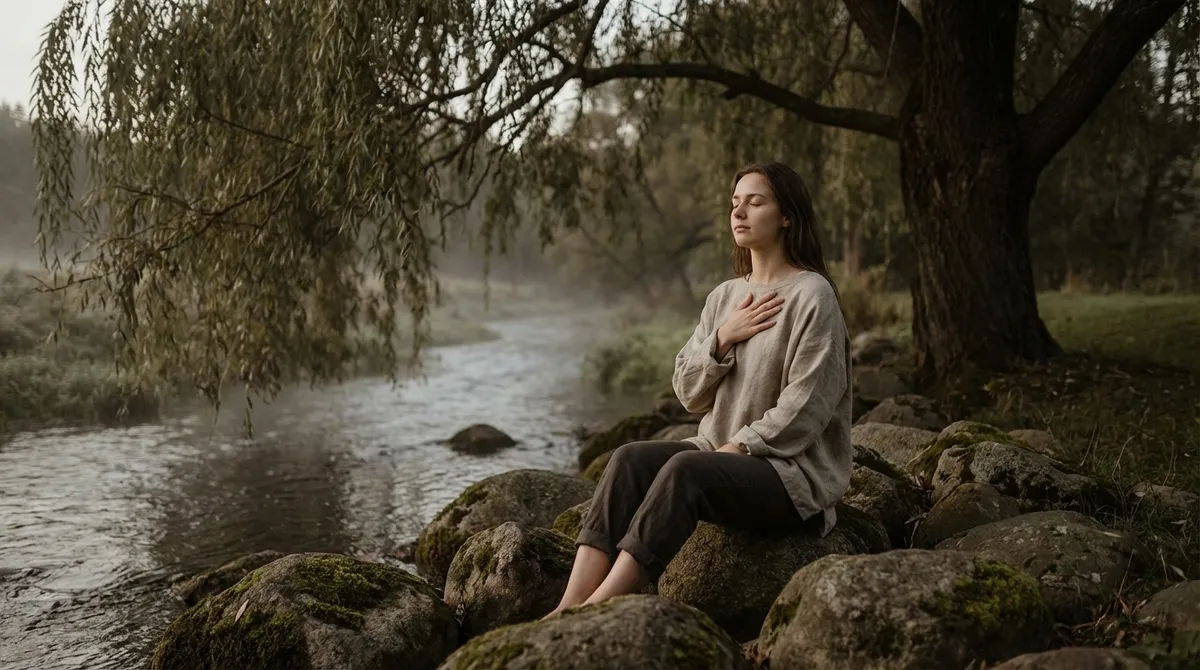
Honoring Your Body’s Signals
Your body is often the first to know you’re stressed, long before your mind catches up. A fluttering chest, quickened breath, clenched jaw, or a heavy, tired feeling can all be quiet invitations to slow down.
Begin by practicing gentle noticing. Several times a day, pause for a brief check‑in: “What is my body saying right now?” Try not to analyze or fix; simply observe. You might realize you’ve been holding your breath, sitting in a stiff posture, or ignoring thirst and hunger. These realizations are not failures—they are doorways.
When you catch a signal of stress, respond with a small physical kindness: uncross your legs, let your shoulders drop, drink a glass of water, or step away from your screen for a minute. Over time, this practice trains your nervous system to trust that when it speaks, you will listen, and that you are a safe place for yourself.
A Soft Breathing Practice to Settle the Mind
Breath is one of the gentlest ways to reassure an overworked nervous system. You don’t need a perfect technique or a long meditation session. A few soft, intentional breaths can be enough to create a sense of space inside your day.
Try this quiet pattern, sometimes called “extended exhale” breathing:
- Breathe in slowly through your nose to a comfortable count of four.
- Pause softly for a count of one.
- Breathe out through your nose or mouth to a count of six.
- Rest for a count of one before the next inhale.
Repeat this for 1–3 minutes, or as long as it feels kind. The slightly longer exhale helps nudge your body toward its “rest and digest” response, signaling that you are safe enough to soften.
If counting feels stressful, let it go. Instead, simply notice the coolness of the air as you inhale and the warmth as you exhale. Let your breath be like a tide, coming in and going out, not forced, just gently tended.
Creating Tiny Islands of Quiet in Your Day
Stress often grows when the day feels like one long, unbroken stretch of doing. You don’t always need a full break; sometimes you just need small islands of quiet—brief, intentional pauses that interrupt the rush.
Consider weaving in “micro‑rests”:
- Closing your eyes for 30 seconds between tasks
- Placing one hand on your chest for three breaths before opening a new email
- Standing by a window and letting your gaze soften on something far away
- Taking a slow sip of tea or water and feeling it move through your body
- Pausing at doorways—literal or metaphorical—to inhale, exhale, and reset
Tiny moments like these won’t remove every stressor, but they can gently change your relationship with them. Instead of being swept along by the current of the day, you create brief shelter points. Over time, these small pauses can weave together into a more spacious way of being.
Soft Boundaries as Acts of Self‑Kindness
Stress often deepens when we say “yes” to everything and “no” only when we are already overwhelmed. Boundaries can sound harsh, but at their heart, they are simply clear expressions of care—for yourself and for others.
Begin with one small boundary that feels doable. It might be:
- Not checking work emails after a certain time in the evening
- Letting messages wait instead of replying instantly
- Saying, “I’d love to help, but I don’t have the capacity this week”
- Protecting 10–15 minutes of quiet at the start or end of your day
When you set a boundary, you may feel guilt or worry at first. This is natural, especially if you’re used to being available for everyone. Try saying to yourself, “Taking care of myself helps me show up more steadily for others.” Each gentle boundary is like placing a soft cushion under the places where you are most prone to burn out.
Boundaries are not walls; they are pathways that help you move through life with more steadiness, less resentment, and deeper respect for your own limits.
Choosing One Simple Comfort Ritual Each Day
Rituals are different from routines. A routine is something you do; a ritual is something you do with intention. Even a tiny, two‑minute ritual can be a powerful anchor on stressful days—a reminder that your life holds more than tasks and to‑do lists.
Choose one small comfort ritual to tend to daily:
- Lighting a candle and taking three intentional breaths before bed
- Placing a warm washcloth over your face for a moment of softness
- Writing down one thing you’re grateful for—no pressure, just one
- Stepping outside to feel the air on your skin, even for 60 seconds
- Gently stretching your neck and shoulders before you sit down to eat
Let your ritual be simple enough that you can keep it even on hard days. The goal is not to do it perfectly, but to have a consistent thread of care running through your life. Over time, this ritual becomes a quiet signal to your nervous system: “Even when things are hard, I will make time to care for you.”
Conclusion
Stress will visit; that is part of being human. But how you meet it can soften its edges. By listening kindly to your body, tending to your breath, carving out tiny pockets of quiet, honoring your limits, and nurturing small daily rituals, you create a gentler inner landscape to move through.
You do not have to transform your life overnight. Choose one of these calming practices and try it with tenderness for a few days. Let it be imperfect, let it fit who you are. Over time, these soft choices can become a steady, peaceful companion—one quiet, caring moment at a time.
Sources
- American Psychological Association – Stress Relief and Management - Overview of stress, its effects on the body, and evidence‑based coping strategies
- Mayo Clinic – Relaxation Techniques: Try These Steps to Reduce Stress - Explains breathing, relaxation, and stress‑reduction practices
- Cleveland Clinic – Breathing Exercises for Stress - Describes simple breathing techniques to calm the nervous system
- National Institutes of Health (NIH) – Mind and Body Practices - Research‑based information on mindfulness, relaxation, and related practices
- Harvard Health – The Importance of Self‑Care - Discusses self‑care, boundaries, and their impact on mental well‑being