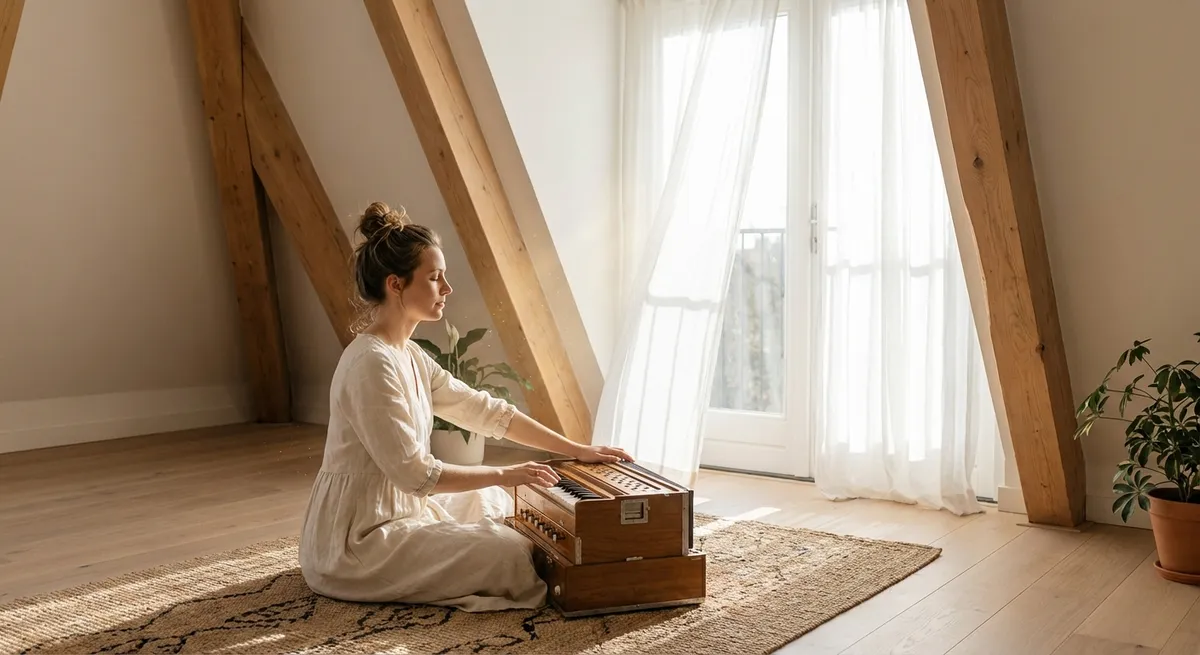
Soft Mornings: Beginning the Day Without Rush
How you begin your morning can softly echo through the rest of your day. You do not need a long routine; even two or three mindful minutes can create a sense of quiet inside you. Before reaching for your phone, pause in bed or by a window and notice three gentle things: the light in the room, the sound around you, the feeling of your breath moving in and out. Let these details remind you that you are here, and there is no need to sprint into the day.
If possible, give yourself a small cushion of time between waking and engaging with the outside world. Sip your tea or coffee slowly, feeling the warmth, the taste, the way the cup rests in your hands. This is not about being productive—it is about letting your nervous system know: “It is safe to start softly.” Even on rushed mornings, you can take a single conscious breath before you leave the house, placing a hand on your chest and silently offering yourself a kind phrase, such as, “May I move gently today.”
Over time, these tiny moments become a quiet habit. Your mornings shift from a blur into a tender doorway—a way of stepping into the day with steadier feet and a softer heart.
Calming Tip 1: One-Minute Breathing Pause
When life feels crowded, a simple breathing pause can be like opening a window in a stuffy room. You do not have to meditate for long stretches; a single minute of kind attention can help your body unwind. Find a comfortable position—sitting, standing, or even lying down. Let your shoulders soften and notice the natural pace of your breath without trying to change it.
Then, gently invite a slower rhythm: breathe in through your nose for a count of four, hold for a count of two, and exhale through your mouth or nose for a count of six. Repeat this pattern for about one minute. If counting feels stressful, simply lengthen your exhale slightly more than your inhale; longer exhalations can signal to your nervous system that it is safe to relax.
As you breathe, you might silently repeat a calming phrase such as, “In: I soften. Out: I let go.” When the minute is over, notice how your body feels—perhaps a little heavier in your seat, your jaw a bit looser, your thoughts a touch slower. This gentle practice can be used anytime: before a meeting, during a difficult conversation, or while waiting in line. It is a quiet way of telling yourself, “I am here for me.”
Calming Tip 2: Gentle Boundaries for a Quieter Mind
Peaceful living often begins with the simple skill of saying “enough” with kindness. Boundaries are not walls; they are soft lines that protect your energy and allow you to rest. Notice the moments when your body tightens—shoulders rise, stomach clenches, breath shortens. These signals often whisper, “This is too much,” even before your mind has found the words.
Start small. You might limit how often you check messages, or allow yourself a technology-free hour in the evening. You could gently decline an invitation when you are tired, or ask for more time before giving someone an answer. When you say no, try to do it with warmth, both for yourself and for the other person: “I would love to, but I don’t have the space right now. Thank you for understanding.”
Creating boundaries is an act of compassion, not selfishness. By protecting your own capacity, you become more available for the moments that truly matter. Over time, these quiet choices form a kind of inner shelter—a space where your needs are heard, honoured, and met with gentleness.
Calming Tip 3: Tiny Rituals of Care in Ordinary Moments
You do not have to wait for a vacation or a perfect day to feel calm. Small, personal rituals can turn ordinary moments into pockets of rest. Choose one or two daily activities you already do—washing your hands, making tea, walking to your car—and turn them into soft reminders to slow down.
While washing your hands, feel the temperature of the water, the texture of the soap, the circular motion of your hands moving together. Let this become a brief pause, a way to rinse off not just physical dirt but also lingering tension. When you drink water, take a moment to notice how it feels to swallow, imagine it soothing and nourishing your body from the inside out.
These simple rituals do not require extra time; they only ask for a bit more attention. As you repeat them, they become anchors throughout your day—little stones of calm you can step on whenever the ground feels unsteady. In this way, peaceful living weaves itself into your routine, not as something added, but as something gently awakened.
Calming Tip 4: Softening the Inner Voice
Often, the loudest source of stress is not the world around us, but the voice within us. The inner critic can be harsh, demanding, and unforgiving, especially when we are already tired. Peaceful living asks us to meet that voice with a different tone—one of curiosity and tenderness instead of judgment.
Begin by simply noticing how you speak to yourself when you make a mistake or feel overwhelmed. Would you speak this way to a dear friend? If not, gently experiment with a kinder response. You might say to yourself, “This is hard, and it makes sense that I feel this way,” or “I am doing the best I can with what I have today.” These words do not erase challenges, but they soften the edges around them.
You can place a hand over your heart or on your cheek as you speak to yourself, adding a physical gesture of comfort. Over time, this practice can transform your inner landscape from a battlefield into a place of refuge. When your self-talk becomes softer, your body often follows—breath eases, muscles release, and your system can finally exhale.
Calming Tip 5: Ending the Day with Gentle Closure
How you end your day can quietly support how you sleep and how you greet tomorrow. Instead of slipping from screens directly into bed, try offering yourself a small closing ritual, even if it lasts only a few minutes. This might be dimming the lights, lighting a candle, stretching slowly, or simply sitting in silence.
You might also take a moment to mentally release the day. You could write down three things: one thing that felt nourishing, one thing that felt difficult, and one thing you are ready to set down for now. Let the page hold what you do not need to carry into the night. If writing does not appeal, you can do this as a gentle reflection in your mind: “Today brought [this]. I acknowledge it. I do not need to solve everything before I sleep.”
As you settle into bed, invite your body to soften from the top of your head to the tips of your toes, part by part, like a slow wave of release. Remind yourself that rest is not a reward you have to earn—it is a natural need, a birthright. Offering yourself a peaceful ending to the day is one of the kindest gifts you can give your tomorrow self.
Conclusion
Peaceful living is not about erasing all stress or creating a life without challenges. It is about learning to meet each moment with a little more softness, a little more breath, and a little more kindness toward yourself. Through gentle mornings, brief breathing pauses, tender boundaries, tiny rituals, and calming night-time closures, you slowly create a quieter inner home—a place you can return to, no matter what is happening around you.
You do not need to change everything at once. Choose one small practice that feels kind and possible today. Let it be simple. Let it be imperfect. Over time, these small acts of care weave together into a steady, comforting rhythm—a way of living that honours your nervous system, your heart, and the quiet, steady peace that has been within you all along.
Sources
- [American Psychological Association – Stress Management](https://www.apa.org/topics/stress) - Overview of stress, its effects on the body, and evidence-based strategies for coping
- [National Institutes of Health – Relaxation Techniques](https://www.nccih.nih.gov/health/relaxation-techniques-what-you-need-to-know) - Research-backed information on breathing, relaxation, and their benefits for stress reduction
- [Harvard Health Publishing – Understanding the Stress Response](https://www.health.harvard.edu/staying-healthy/understanding-the-stress-response) - Explains how stress affects the nervous system and why calming practices can help
- [Mayo Clinic – Sleep Tips: 6 Steps to Better Sleep](https://www.mayoclinic.org/healthy-lifestyle/adult-health/in-depth/sleep/art-20048379) - Practical guidance on evening routines and habits that support quality rest
- [Greater Good Science Center, UC Berkeley – Self-Compassion](https://greatergood.berkeley.edu/topic/self_compassion/definition) - Explores the science of self-compassion and how a kinder inner voice supports emotional well-being