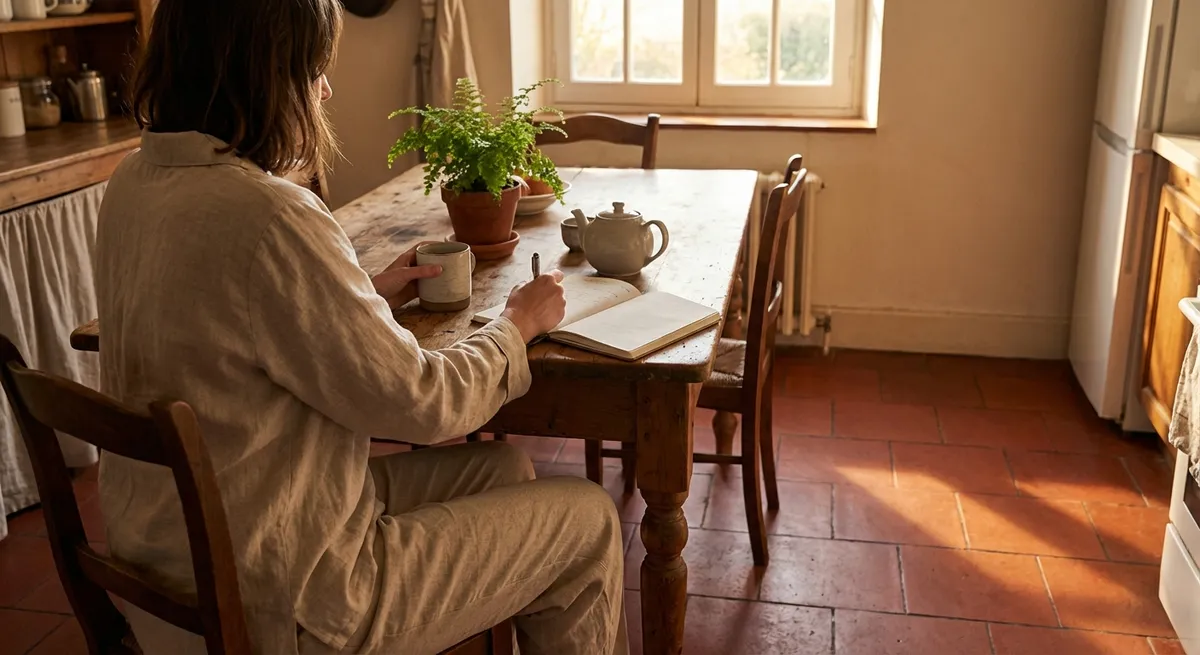
Meeting Your Stress with Kind Attention
Before we can soothe stress, it helps to notice how it appears in our bodies and minds. Stress can show up as a tight jaw, shallow breathing, irritability, racing thoughts, or even numbness. Instead of pushing these sensations away, you might try greeting them with gentle curiosity: “Oh, this is how stress feels in me right now.”
This kind of noticing—often called mindfulness—doesn’t require perfection or long meditation sessions. It can begin with a quiet moment, a hand resting on your chest, and a single slow breath. By acknowledging your experience instead of battling it, you send your nervous system a message of safety. From this softer place, it becomes easier to choose small, supportive actions that ease the day.
Calming Tip 1: Breathe as If You Have Time
When stress rises, the breath often becomes quick and shallow, signaling the body to stay on high alert. A slow, steady breath can gently guide your system back toward calm. You don’t need any special tools or a perfect posture—just a willingness to sit with yourself for a few moments.
You might try this simple rhythm: breathe in slowly through your nose for a count of four, hold softly at the top for a count of two, then exhale through your mouth for a count of six. The longer exhale helps activate the body’s relaxation response. Repeat this pattern a few times, noticing the sensation of air moving in and out, without forcing anything. Even two or three minutes can create a subtle shift, like opening a small window in a stuffy room.
Calming Tip 2: Give Your Body a Gentle Pause
Stress often settles into the body as stiffness, aches, or restlessness. Offering your muscles a brief, kind stretch can signal to your mind that it is safe to soften. You don’t have to be flexible or athletic; the goal is comfort, not performance.
You might start by rolling your shoulders slowly backward and forward, then letting them drop away from your ears. Gently circle your wrists and ankles, noticing any areas of tightness without judgment. If it feels good, reach your arms overhead and stretch as if you’re waking up from a restful nap. These small movements remind your body that it is cared for, and even a minute of mindful stretching can help release tension you didn’t realize you were holding.
Calming Tip 3: Create a Quiet Sensory Moment
Our senses are often flooded during stressful days—bright screens, constant notifications, background noise. Creating a brief “sensory oasis” can help your nervous system step out of overwhelm. It doesn’t have to be elaborate; it just needs to feel gentle and nourishing to you.
You might dim the lights for a few minutes, light a softly scented candle, or wrap yourself in a warm blanket. Perhaps you hold a warm mug between your hands and focus on its steady heat, or listen to a calming piece of music with your eyes closed. By choosing one or two soothing sensations and lingering with them, you give your mind a simple, comforting place to rest, even if only for a short time.
Calming Tip 4: Speak to Yourself Like Someone You Love
Stress tends to amplify self-criticism: “I should be handling this better,” or “Why can’t I keep up?” Harsh inner dialogue can keep your body in a state of tension. Choosing kinder words does not erase responsibilities, but it can change the emotional weight you carry as you move through them.
When you notice stress rising, you might place a hand over your heart or on your cheek and quietly say something gentle to yourself, such as: “This is hard, and I’m doing the best I can,” or “It’s okay to feel overwhelmed; I am learning to care for myself.” These phrases, repeated softly, can become a kind anchor throughout the day. Over time, compassionate self-talk can help reduce the intensity of stress and increase your sense of resilience.
Calming Tip 5: Make Space for One Small Joy
When life feels crowded, joy can be the first thing we postpone. Yet small moments of pleasure—tiny sparks of delight—can act as natural stress buffers. They remind your nervous system that the world still holds softness, even in busy seasons.
You might step outside for a few minutes to feel fresh air on your face or to notice the color of the sky. Perhaps you savor a favorite snack slowly, allowing yourself to fully taste each bite. You could send a kind message to a friend, tend to a plant, or spend a moment with a pet. These are not distractions from life; they are gentle threads of nourishment that help you stay connected to yourself when things feel heavy.
Conclusion
Stress may be a regular visitor in your life, but it doesn’t have to be the one guiding every step. With a few soft, intentional practices—steadying your breath, easing your body, soothing your senses, speaking kindly to yourself, and welcoming small moments of joy—you can create tiny pockets of refuge throughout your day.
You don’t need to do all of these at once. You might choose one tip that feels approachable and return to it whenever you notice your shoulders creeping upward or your thoughts racing ahead. Over time, these quiet acts of care can gently reshape your relationship with stress, reminding you that calm is not a destination far away, but something you can touch, one small moment at a time.
Sources
- [American Psychological Association – Stress Effects on the Body](https://www.apa.org/topics/stress/body) – Overview of how stress impacts different body systems and why calming practices matter
- [National Institutes of Health – Relaxation Techniques](https://www.nccih.nih.gov/health/relaxation-techniques-for-health) – Evidence-based information on breathing, progressive relaxation, and other calming methods
- [Harvard Health Publishing – Mindfulness for Stress Relief](https://www.health.harvard.edu/mind-and-mood/mindfulness-practice-may-help-ease-anxiety-mental-stress) – Discussion of how mindfulness practices can reduce stress and support well-being
- [Mayo Clinic – Positive Thinking and Stress Management](https://www.mayoclinic.org/healthy-lifestyle/stress-management/in-depth/positive-thinking/art-20043950) – Explores how self-talk and a more compassionate inner voice can help manage stress
- [Cleveland Clinic – The Health Benefits of Joy](https://health.clevelandclinic.org/health-benefits-of-joy) – Explains how small moments of joy support emotional and physical health