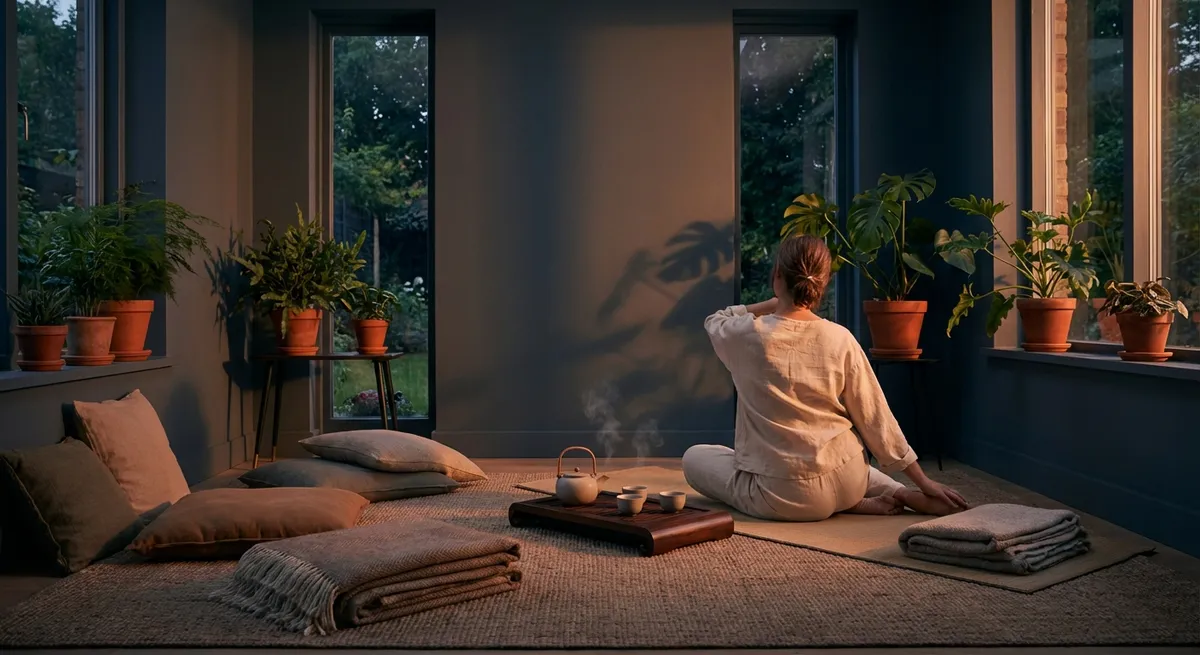
Below are five calming practices you can return to whenever you need a softer landing. You can explore them slowly, one at a time, and let them become familiar friends you reach for when life feels heavy.
1. Breathing Like a Soft Tide
Your breath is always with you, moving in and out without asking for attention. When stress gathers, gently turning toward your breath can be like sitting beside a calm shoreline, watching small waves come and go.
Find a comfortable position, either sitting or lying down. Let your shoulders relax, even just a little. Slowly breathe in through your nose to a slow count of four, feeling your chest and belly rise. Pause softly at the top of the breath, without straining, then exhale through your mouth for a count of six. Imagine you are breathing out a little weight, a little tension, each time. You can repeat this for a few minutes, letting your mind rest on the simple rhythm of counting. If thoughts wander in, treat them like clouds drifting by—noticed, and then allowed to move on.
This gentle lengthening of the exhale can signal to your body that you are safe, inviting your nervous system to step back from “high alert.” Over time, this simple practice can become a quiet anchor you can use anywhere: in the car, before sleep, or in the middle of a busy day.
2. Creating a Small Island of Calm in Your Space
The spaces we live and work in can either stir us up or gently settle us. You don’t need a perfect home or a quiet house to feel calmer; even a tiny corner can become an island of rest.
Choose a spot that feels reachable—a chair by a window, a corner of your bed, a small patch of floor. Clear away just a little clutter from that area, not as a chore, but as an act of kindness toward yourself. You might place a soft blanket, a favorite book, a candle, or a small plant there—objects that quietly say, “You are welcome to rest here.” Let this space become a signal to your body: when you sit here, you are allowed to slow down.
Each day, spend a few minutes in this spot with no expectation of productivity. You might sip tea, look outside, stretch gently, or simply breathe. Over time, your body may begin to recognize this place as a cue for relaxation, helping you unwind more naturally, even on difficult days.
3. Speaking Kindly to Yourself When Stress Rises
Stress often brings along a chorus of harsh inner voices: “You should be doing more,” “Why can’t you handle this?” This quiet criticism can keep your body tense, even when nothing is urgently wrong. Learning to soften the way you speak to yourself is a powerful, tender form of relaxation.
When you notice tension or worry, pause for a moment as if you are listening to a dear friend. Place a hand gently on your chest or over your belly. Acknowledge what you are feeling with simple, honest words: “This is a lot for me,” or “I feel overwhelmed right now.” Then, respond to yourself with the same compassion you would offer someone you care about: “It makes sense that I feel this way,” or “I’m doing the best I can with what I have today.”
This small shift—from judgment to understanding—can ease the tightness in your body and soften your breathing. It doesn’t erase the challenges you face, but it changes the way you carry them. With practice, this inner kindness becomes a steady presence you can lean on, especially in moments when you feel alone with your stress.
4. Letting Your Body Uncurl: Gentle Release Through Movement
When life feels heavy, the body often curls inward: shoulders lift, jaw tightens, breath becomes shallow. Intentional, gentle movement can help your body remember how to relax, even if your mind still feels busy.
You don’t need a long workout or special equipment. Start with your neck and shoulders: slowly roll your shoulders up toward your ears as you breathe in, then let them drop down and back as you exhale. You might gently circle your head, keeping the movements small and comfortable. Stretch your hands, opening and closing your fingers, noticing the sensation of release.
If you’re able, stand up and sway slowly from side to side, letting your arms hang loosely. Feel your feet connect with the floor, as if you’re grounding yourself. These light, unhurried movements help release tension stored in your muscles and can guide your nervous system toward a calmer state. Think of it not as “exercise,” but as a quiet conversation with your body: “Where can I soften, even a little?”
5. Closing the Day With a Soft Evening Ritual
Evenings can sometimes blur into late-night screens, unfinished tasks, and restless thoughts. Creating a gentle, repeatable evening ritual can signal to your body that it is safe to unwind and drift toward rest.
Choose two or three simple actions you can do most nights, without pressure. You might dim the lights, put your phone away for the last 20–30 minutes before bed, and play soft music or nature sounds. Perhaps you write down three small things you’re grateful for or simply note one thing you’re ready to set down for the night: “Today, I release…” and fill in whatever feels heavy.
If it feels soothing, prepare a warm drink without caffeine, like herbal tea, and drink it slowly, paying attention to the warmth in your hands and the gentle taste. Treat this time as a soft boundary between the demands of the day and the shelter of rest. Over time, your body will begin to recognize these cues and may find it easier to settle, allowing your sleep to become a deeper source of renewal.
Conclusion
Relaxation does not have to be grand or complicated. It can be as simple as one deeper breath, one unclenched shoulder, one kind sentence spoken softly to yourself. These small practices—breathing gently, tending your space, speaking with compassion, moving slowly, and closing the day with care—are quiet ways of saying, “I deserve softness, even in a busy life.”
You don’t need to practice all of them at once. You might choose just one and let it accompany you this week, noticing how it feels. With time, these gentle habits can weave together into a calmer way of living, where stress may still visit, but it doesn’t have to stay as long or feel as heavy.
Sources
- National Institutes of Health – Relaxation Techniques – Overview of evidence-based relaxation methods like breathing and progressive muscle relaxation
- Mayo Clinic – Stress Management – Practical stress-relief ideas, including movement and environment changes
- American Psychological Association – Mindfulness and Stress – Explains how mindful attention to breath and body can reduce stress
- Cleveland Clinic – Sleep Hygiene Tips – Guidance on evening routines and practices that support restful sleep
- Harvard Health Publishing – The Power of Positive Self-Talk – Discusses how kinder inner dialogue can improve stress and emotional well-being